
The Vibe Coding Revolution – How Much Further Can it Go??
As a marketing expert, I’m constantly looking at the cutting edge of technology to understand how it will influence consumer behavior, product development, and market dynamics. We’ve talked about AI accelerating content creation, but there’s a new, more profound shift on the horizon: vibe coding.
My recent experience with platforms like Hostinger Horizons, which are pushing the boundaries of what non-developers can achieve with AI, has truly opened my eyes. We’re not just talking about generating boilerplate code; we’re talking about crafting functional, aesthetically pleasing, and emotionally resonant digital experiences with unprecedented speed and accessibility.
So, what is “vibe coding,” and how will it impact SaaS and app development? And, the million-dollar question: will we even need developers in the next five years?
What is “Vibe Coding”?
I define “vibe coding” as the intuitive, AI-driven generation of software solutions where the user’s intent, emotional tone, aesthetic preferences, and desired user experience (the “vibe”) are paramount in the development process, often with minimal explicit coding.
Think beyond simply asking for “a CRM.” With vibe coding, you might say:
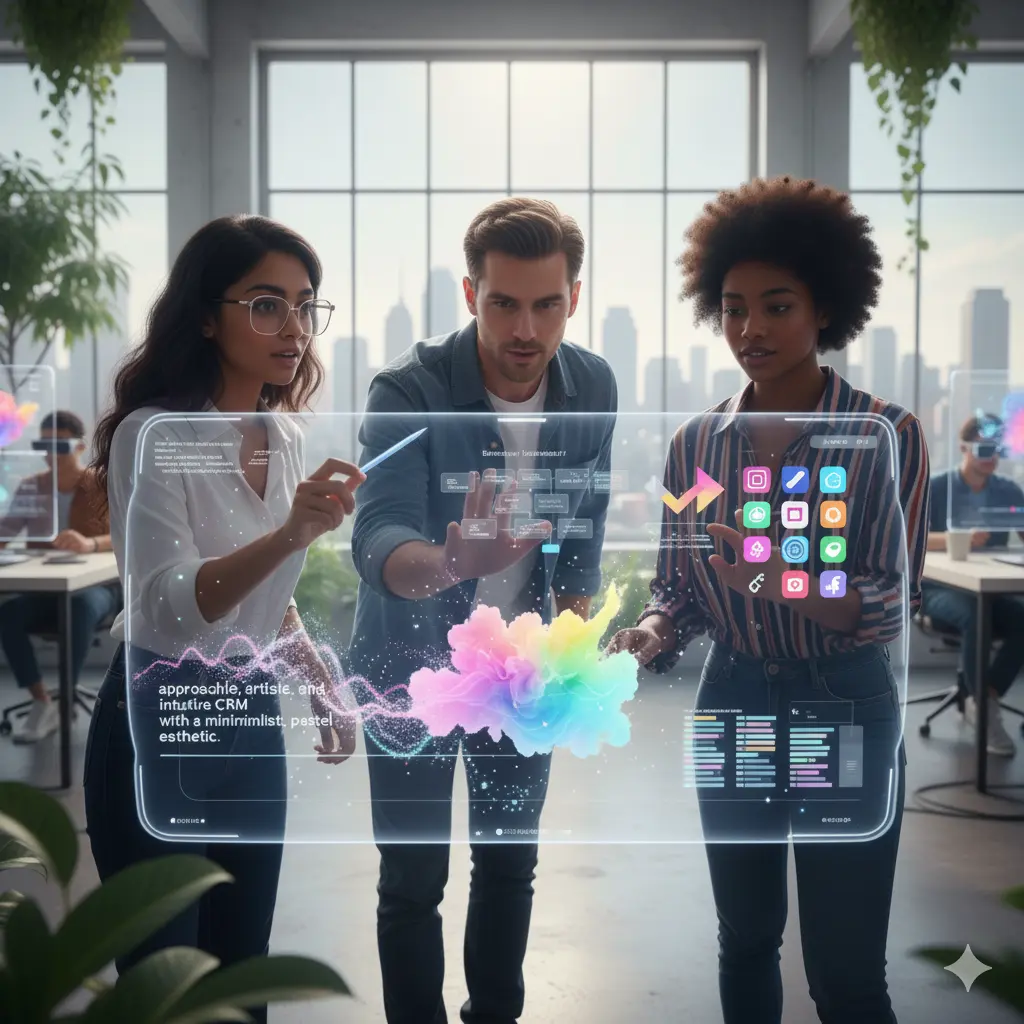
- “Create a CRM for small creative agencies. It needs to feel approachable, artistic, and intuitive, with a minimalist, pastel aesthetic and a workflow that guides users gently, avoiding aggressive sales language.”
- “Develop a social media scheduling app for Gen Z influencers. It should be playful, fast, and highly visual, with dynamic transitions and a sense of effortless cool. No corporate jargon.”
The AI interprets these qualitative, emotional cues and translates them into functional code, UI/UX design, and even integrated micro-interactions that deliver the desired “vibe.”
The Impending Impact on SaaS and App Development
1. The Democratization of Product Creation: Everyone’s a “Founder”
This is perhaps the biggest disruption. Imagine a marketing manager with a brilliant idea for a niche analytics tool, or a fitness coach wanting a highly personalized client app. Historically, they’d need to hire developers, raise significant capital, and navigate complex technical jargon.
With vibe coding, that barrier crumbles. They can articulate their vision in natural language, describe the desired user journey and aesthetic, and AI generates the initial (and increasingly refined) product. This will lead to an explosion of hyper-niche, highly personalized SaaS tools and apps, solving problems for tiny, underserved segments.
2. Focus on UX and Emotional Resonance Over Raw Functionality
For a long time, the focus in tech was on “what it does.” Now, it’s shifting to “how it feels.” Vibe coding elevates UX and emotional design to the forefront of the development process. Marketers know that brand is built on feeling, and now, software can be built with that same principle at its core from day one.
This means:
- Faster Iteration of UX Concepts: Designers can rapidly prototype entire user flows based on vibe descriptions, rather than just static mock-ups.
- Built-in Brand Identity: The app’s “personality” can be ingrained from its inception, making it more sticky and distinctive in a crowded market.
- Hyper-Personalization at Scale: Apps could adapt their UI/UX based on individual user preferences, learning their “vibe” and adjusting accordingly.
3. Speed to Market Will Be Insane
Forget months-long development cycles for MVPs. With vibe coding, the initial framework of a functional app could be generated in days, if not hours. This dramatically compresses the time from idea to launch, allowing companies to test market demand, pivot quickly, and respond to trends at an unprecedented pace. This is a marketer’s dream – less waiting, more doing.
4. The Rise of the “Prompt Engineer” / “Vision Architect”
If AI is writing the code, the most valuable skill becomes the ability to articulate a clear, compelling, and nuanced vision. Those who can effectively communicate “the vibe” – blending business strategy, user psychology, and aesthetic principles into precise prompts – will be the new maestros of software creation. Marketers and product managers are uniquely positioned for this role.
So, Will We Need Developers in the Next Five Years?
This is the question on everyone’s mind, and my marketing expert’s answer is: Yes, but their role will profoundly transform.
- The AI Whisperers & Refiners: Just as AI-generated art still needs human curators and master artists to achieve true genius, AI-generated code will need skilled developers. They will be the ones who:
- Debug Complexities: AI can produce errors or inefficiencies; human developers will be essential for deep-level debugging and optimization.
- Integrate & Customize: Integrating AI-generated code with legacy systems, complex APIs, or highly specialized hardware will still require expert human touch.
- Ensure Security & Scalability: AI might create functional code, but ensuring it’s robust, secure, and scalable for enterprise-level demands will remain a critical human responsibility.
- Push Boundaries: AI learns from existing data. True innovation – creating something entirely new that pushes beyond current paradigms – will still likely require human ingenuity and novel algorithmic thinking.
- Architects of AI Development Tools: Someone has to build the vibe coding platforms themselves! The demand for AI engineers, machine learning specialists, and data scientists who create these sophisticated generative AI tools will explode.
- Specialists in the “Last Mile”: The 5% of a project that requires deep domain knowledge, complex algorithms, or custom, non-standard solutions will still fall to human developers. These will be highly specialized, highly valued roles.
Conclusion: An Evolution, Not an Extinction
“Vibe coding” is not about eliminating developers; it’s about elevating the developer’s role from coding individual lines to orchestrating complex AI systems, designing intelligent architectures, and tackling the truly intractable problems that AI can’t yet solve.
For marketers and product leaders, it’s an incredible opportunity to bring products to life faster, more intuitively, and with a stronger, more authentic “vibe” from day one. The future of SaaS and app development will be a symbiotic dance between human vision and AI execution, leading to an unprecedented era of digital innovation.
Get ready for the vibe shift – it’s going to be a wild, creative ride.
Check out Hostinger Horizons https://shorturl.at/5H0aK