

In the fast-evolving world of freelancing, where designers, developers, writers, and other creatives hustle for gigs on platforms like Upwork and Fiverr, artificial intelligence (AI) is emerging as a game-changer. AI has the potential to supercharge outputs and revenue streams for independent workers. But, like any disruptive technology, it comes with its share of challenges. As of 2025, studies show AI is reshaping the freelance economy, boosting productivity for some while displacing others. In this blog, we’ll dive into the obvious upsides, highlight real-world examples, and honestly examine the downsides to help freelancers navigate this AI-driven landscape.
The Upsides: How AI Supercharges Freelancer Productivity and Revenue
AI isn’t just a buzzword; it’s a toolkit that amplifies human capabilities, allowing freelancers to work smarter, faster, and more creatively. Here’s how it’s benefiting the marketplace:
1. Enhanced Productivity and Efficiency
AI tools automate repetitive tasks, freeing up time for high-value work. For designers, generative AI like Midjourney or Adobe Firefly can quickly create mockups, color palettes, or even full designs based on prompts, slashing hours off the creative process. Developers benefit from code assistants like GitHub Copilot, which suggest snippets, debug errors, and even write boilerplate code, enabling them to deliver projects in half the time.
How AI Can Help Graphic Designers Boost Creativity and Efficiency …
This efficiency translates to more gigs and higher earnings. A 2025 survey of American freelancers found that AI users reported increased productivity and income, with tools handling everything from client communication to invoicing. For instance, a freelance writer might use AI to outline articles or generate research summaries, allowing them to take on more clients without sacrificing quality.
2. New Opportunities and Skill Expansion
AI is creating entirely new freelance niches. Demand for AI specialists—such as prompt engineers, AI ethicists, or machine learning consultants—has surged. Globally, while AI might eliminate 85 million jobs by 2025, it’s projected to create 97 million new ones, resulting in a net gain. Freelancers can pivot by upskilling; developers might specialize in integrating AI into apps, while designers could offer AI-enhanced branding services.

Connor Finlayson How I Use AI to Supercharge My No-Code Marketplace
Moreover, AI democratizes access to expertise. Tools like ChatGPT or Claude help non-native speakers craft professional proposals, leveling the playing field in a global marketplace. This means freelancers can command higher rates by delivering polished, data-driven work that stands out.
3. Better Client Outcomes and Market Reach
AI enables personalized services at scale. Freelancers can use analytics tools to predict client needs or optimize portfolios for search algorithms on freelance platforms. In content creation, AI helps tailor SEO strategies, boosting visibility and attracting more clients. The result? Faster turnaround times, happier clients, and repeat business that boosts revenue streams.
Overall, AI is transforming freelancing into a more dynamic, opportunity-rich field, where outputs are “turbocharged” as you put it.
The Downsides: Potential Pitfalls and Risks in the AI Era
While the upsides are compelling, AI’s integration isn’t all smooth sailing. It introduces risks that could undermine the very freelancers it’s meant to empower.
1. Job Displacement and Reduced Opportunities
One of the biggest concerns is automation replacing human roles. Generative AI has already led to a 2% decline in freelance contracts and a 5% drop in earnings for those in exposed occupations like writing and data entry. A study from 2025 highlights a 21% slash in freelance job opportunities, with predictions of worse impacts in 2026. Even top performers aren’t immune; AI tools like ChatGPT are upending markets by handling routine tasks that once paid the bills.

Is AI causing a massive wave of unemployment now? : r/OpenAI
For designers and developers, while AI assists, it can commoditize entry-level work, flooding the market with low-cost, AI-generated alternatives and driving down rates.
2. Ethical and Quality Concerns
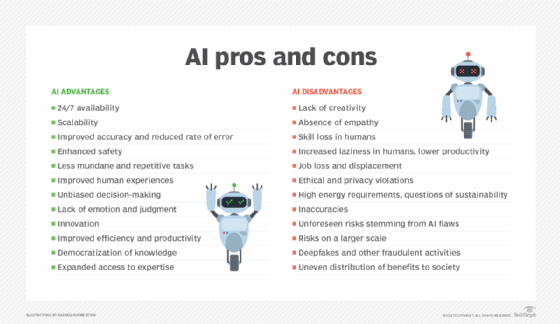
AI-generated content raises questions about authenticity and originality. Freelancers relying heavily on AI might face client backlash over plagiarism or lack of human touch, especially in creative fields. There’s also the risk of bias in AI outputs, which could lead to flawed designs or code that doesn’t meet diverse needs.
Additionally, over-reliance on AI might erode skills. If freelancers let tools do the heavy lifting, they could struggle with complex, non-automatable tasks, limiting long-term growth.
3. Adoption Challenges and Inequality
Not all freelancers can easily integrate AI. There’s a learning curve, and tools often require subscriptions, creating barriers for those in developing regions or with limited resources. This could widen the gap between tech-savvy freelancers and others, leading to market saturation where AI users dominate, squeezing out traditional workers.
Advantages and Disadvantages of AI Explained | TechTarget
Cybersecurity risks also loom—AI tools handling sensitive client data could be vulnerable to breaches.
Navigating the AI-Fueled Freelance Future
AI’s impact on the freelancer marketplace is a double-edged sword: it promises to turbocharge outputs and revenues through efficiency and innovation, but it also poses risks of job loss, ethical dilemmas, and inequality. The key for freelancers—whether designers, developers, or beyond—is adaptation. Invest in learning AI tools, focus on uniquely human skills like strategy and empathy, and diversify services to stay resilient.
In 2025, the freelancers who thrive will be those who view AI as a collaborator, not a competitor. What’s your take—ready to embrace the turbocharge?